Innovation
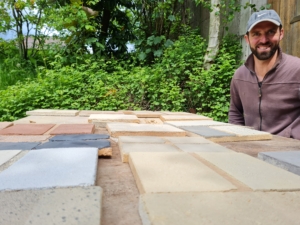
Natural materials and natural building products often have a history spanning thousands of years, and their properties, strengths, and weaknesses are well understood. Or so one would think! Unfortunately, much of this ancient knowledge—at least in Central Europe—has been lost and displaced by supposedly modern building materials.
We have set ourselves the goal of disseminating this knowledge again and adapting traditional building materials to meet today's requirements through research and development. We remain steadfast in our commitment to using only natural—and wherever possible, regional—materials that can be returned to natural cycles after use without being classified as hazardous waste.
Research Project Overview
Ongoing Projects
2023 – 2026 | FFG Climate-Neutral City | TheSIS | ongoing | Project description
2024 – 2027 | EU HORIZON CL5 | FuturHist | ongoing | Project description
2025 – 2028 | FFG Circular Economy and Production Technology| missing.link | ongoing | Project description
2025 – 2028 | FFG Climate-Neutral City| BIOCHARm | ongoing | Project description
Completed Projects
2023 – 2024 | FFG Basic Program | Carbon Clay | successfully completed | Information
2023 | FFG Eco-Voucher | successfully completed
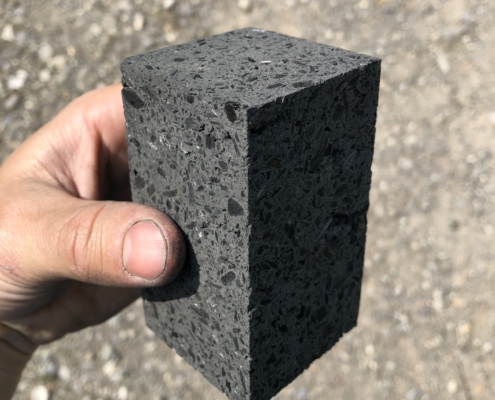
Carbon Clay: the world's first climate-positive, regional, natural, and circular building material
One-third of Austria's final energy consumption is used for buildings. The goal of our innovation project is the development and hygrothermal characterization of a novel, domestic, and ecological building material consisting of biochar and clay. The new material will be available in the form of plaster, masonry blocks, or insulation boards and is suitable for use in new construction or for retrofitting existing buildings.
The results achieved in these research projects lead to an improvement in the Austrian and European building stock. This makes the energetic, economic, comfort-related, and health benefits accessible, such as a reduction in energy demand, lower pollutant and CO2 emissions, increased comfort, and lower heating costs, as well as the prevention of mold growth in interior spaces. At the same time, building materials made from biochar can contribute to buildings becoming carbon sinks.
You can find more details here.