
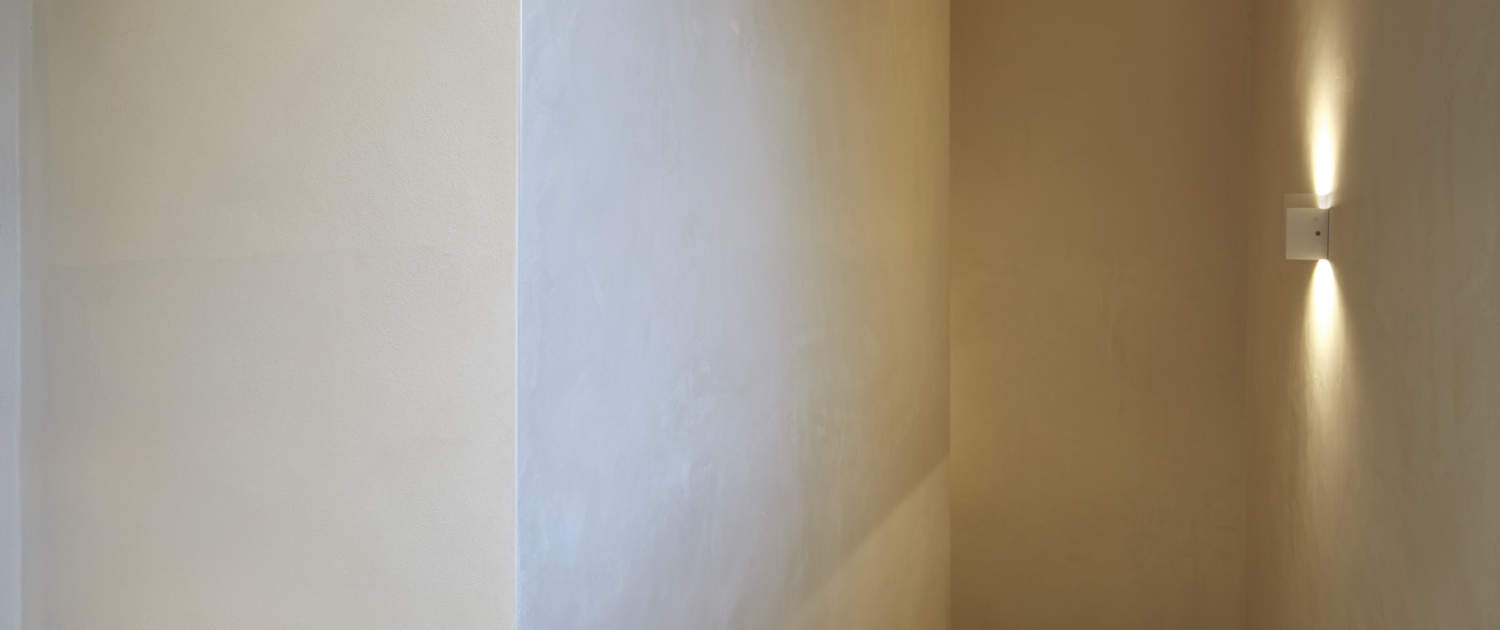
Lime plaster, sometimes also referred to as slaked lime, is quicklime slowly slaked with spring water, which is then left to mature after the slaking process. Good slaked lime is traditionally slaked in wooden tubs and stored for a long time so that it can develop its beneficial properties. In the past, slaked lime was stored in lime pits for years, with "church lime" even stored for up to 25 years.
Slaked lime is not (!) watered-down hydrated lime, which is also often sold as slaked lime! Only high-quality, slaked lime is effective:
- antibacterial – effective against mold
- antistatic – effective against electrosmog
- antiallergenic – effective against allergies
- odor-neutral – effective against unpleasant odors and pollutants
- aesthetic – even for old lime facades
- natural product – purity with an excellent ecological footprint
- suitable for interior and exterior use
- unmatched building physics due to rapid moisture absorption and release
- repairs can be carried out quickly and inexpensively
- optimal indoor climate – excellent moisture absorption
- countless design possibilities
Lime plaster is suitable for masonry and plastering work, as well as for stucco and painting techniques. It is particularly durable and resistant to mold and moisture, making it especially suitable for use in damp rooms such as bathrooms or kitchens.
Incidentally, clay plaster can be excellently combined with lime. Furthermore, properly executed lime coatings do not rub off, which is a major and persistent prejudice. Paint only chalks if it has not been applied professionally or if an inferior product was used.
Anyone wanting to build healthily today can hardly avoid lime. As a central and proven building material, it has been part of our culture for thousands of years.